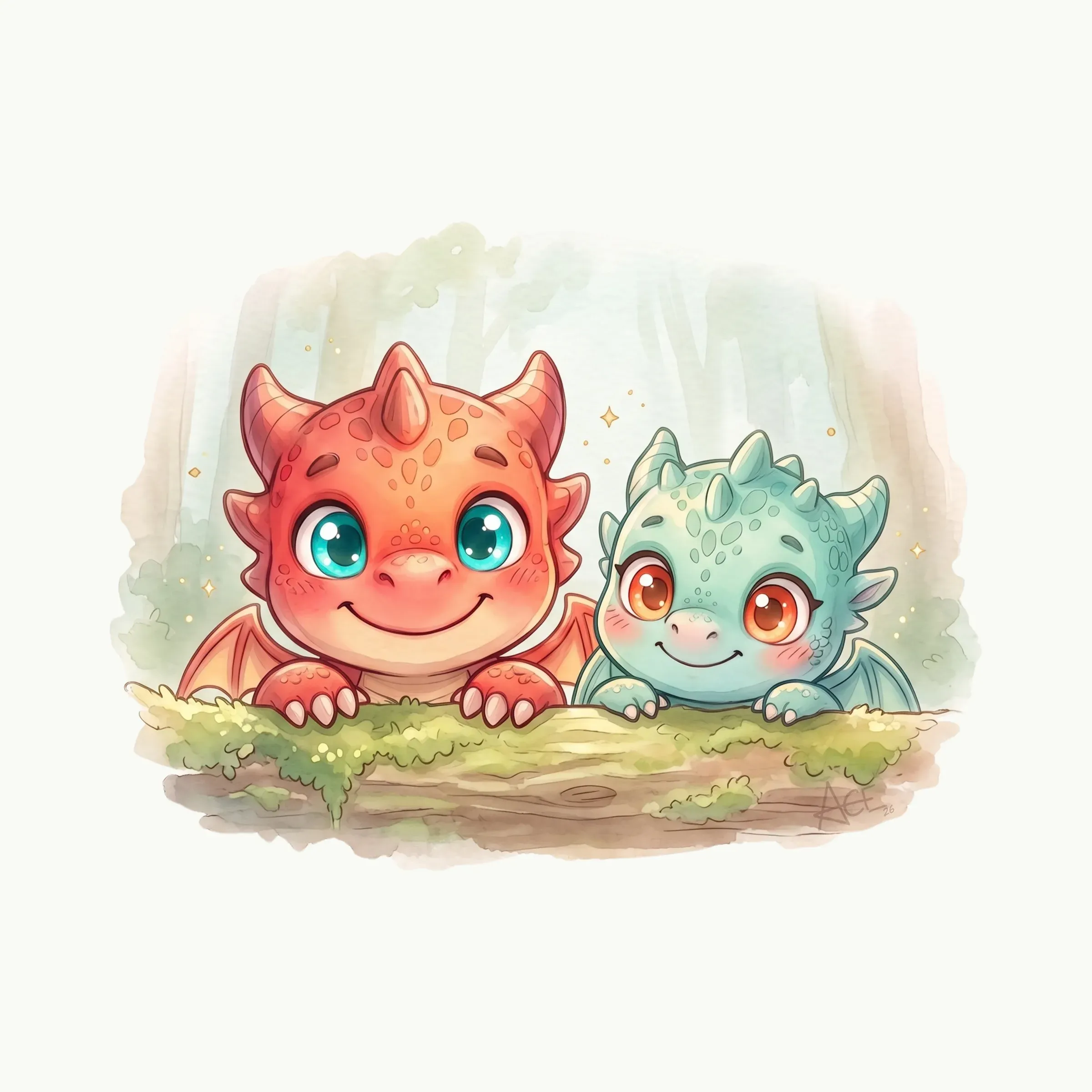
When children start to read, every letter is a small puzzle. Some typefaces make that puzzle harder than it needs to be. That’s why we chose the letters in Draquis & Mipis: What a Racket in the Forest! very carefully.
A typeface designed for learning to read
The English edition is set in Andika, a typeface created by SIL International specifically for literacy and beginning readers. Its letter shapes were designed to be clear, simple and easy to tell apart, so children can focus on reading the story instead of decoding the font.
The letters look like this: a g Draquis
Letters that look like the ones children write
Many typefaces in books use a “double-storey” a and g, shapes that children never write themselves. Andika uses the single-storey a and g, just like the ones children form in their handwriting at school.
That means your little one can recognise in the book the same letters they write in their exercise book, without having to learn a second version of the alphabet.
Fewer letter mix-ups
Early readers often confuse letters that look alike. In a good beginner’s typeface:
- I, l and 1 are clearly different, so “Ill” or “1” never look the same.
- Letters like b, d, p and q are easy to tell apart.
- Letters are generously spaced, so each word stands out on the page.
Fewer mix-ups mean fewer frustrations, and more confidence to keep going.
Short sentences, big pictures, lots of fun
The typeface is only part of it. The story is written with:
- Short sentences and simple words, perfect for first reading.
- Fun sound effects like CRACK! and SPLASH! that children love to read aloud.
- Repetition, so children predict what comes next and feel like real readers.
- Big watercolour illustrations that help them understand what they read.
Tips for reading together
- Read together, without rushing. Read the story first, then let your child fill in the words they know: the characters’ names, the sound effects, the repeated lines.
- Point with your finger. Following the line helps children keep their place and match each written word to what they hear.
- Celebrate every word. Each word they read on their own is a small victory.
- Read it again (and again). Repetition isn’t boring for children: it’s how they learn. Every time, they’ll read a little more by themselves.
- Play with the words. After reading, ask them to write their favourite character’s name, or Grumbles’ famous line: Ribbit! What a racket!
- Talk about the pictures first. Look at the illustration together and guess what will happen. They’ll come to the text curious and ready.
What age do children start reading?
Every child is different, but most start recognising letters and short words between 4 and 5, and read short sentences on their own between 5 and 7. Before that, listening to stories read aloud is already a wonderful way to get ready.
That’s why Draquis & Mipis is for a wide range, from 2 to 8: younger children love listening and looking at the pictures, and older ones read it on their own.
Free printables to keep playing
In the printables section you’ll find free colouring pages and character cut-outs as A4 PDFs, ready to print. A great way to keep reading feeling like play.